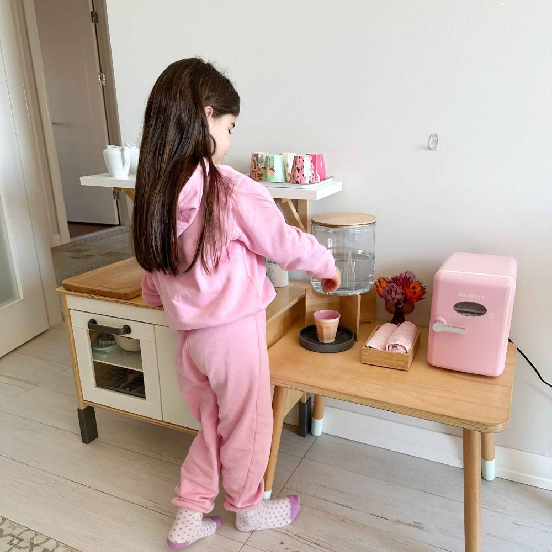
As your child transitions into the second plane of development (6-12), practical life changes. But it remains just as important!
In the early years (birth to age 6), practical life activities are the foundation of the Montessori approach at home. From pouring to folding cloths, to caring for plants, these hands-on tasks support the development of fine motor skills, focus, independence, and confidence. They’re how young children begin to orient themselves in the world and learn: I am capable.
But something starts to shift around age 6.
If you’re wondering why your 6 year old, who used to joyfully wipe the table or spoon beans into a bowl, now suddenly shrugs off these same tasks—don’t worry! This is a good sign!
It doesn’t mean practical life is no longer relevant.
It just means it’s time for us to meet them where they are developmentally.
From Mastering to Contributing
Transitioning into the second plane of development is like entering a whole new world. One where curiosity is expanding, reasoning skills are emerging, and the need for purpose is paramount.
In this stage, children no longer just want to help—they want to feel useful. They want to collaborate. They want to solve real problems. They want to know that what they do matters.
Practical life is no longer about skill-building alone. It becomes about meaningful contribution and responsibility.
What Does This Look Like?
How can we meet our 6+ year olds where they are—and keep practical life alive and relevant at home?
We let them take the lead. We give them real-world responsibilities.
They’re ready to handle more complex tasks like:
• Creating the grocery list (and budget for older children)
• Planning a family picnic or movie night
• Making a birthday celebration plan
• Packing for an upcoming trip
• Helping to manage their own schedule or calendar
• Managing a small weekly or monthly allowance on their own
• Setting up a garage sale or donation box
• Taking charge of a weekly family job
These aren’t just “chores”. They’re opportunities to problem-solve, organize, take initiative, and follow through. Exactly the types of executive functioning skills we want them to develop.
This is the age when children want to be needed. They want us to trust them with real things. And when we do, they grow into that trust.
Why This Matters
Montessori observed that second plane children are driven by imagination, social connection, and a deepening sense of justice and morality.
They don’t just want to be told what to do—they want to be involved.
When we offer them real responsibilities and meaningful work, we are speaking directly to their developmental needs.
We are telling them:
“You belong. You are capable. Your contribution matters here.”
This builds confidence, responsibility, and initiative from the inside out.
A Sign of Growth
If your 6+ child seems less interested in traditional practical life work like simple house chores—it’s not a sign they’re lazy or disengaged.
It’s a sign they’re growing.
So step back, shift your lens, and invite them into the bigger picture.
Let them rise to the challenge. Trust the process.
They may just surprise you with how responsible, thoughtful, and independent they become when we offer them the opportunity to be part of something real.
COPYRIGHT © 2023 WONDERHOUSE OF LITTLES LLC. ALL RIGHTS RESERVED
Leave a Reply