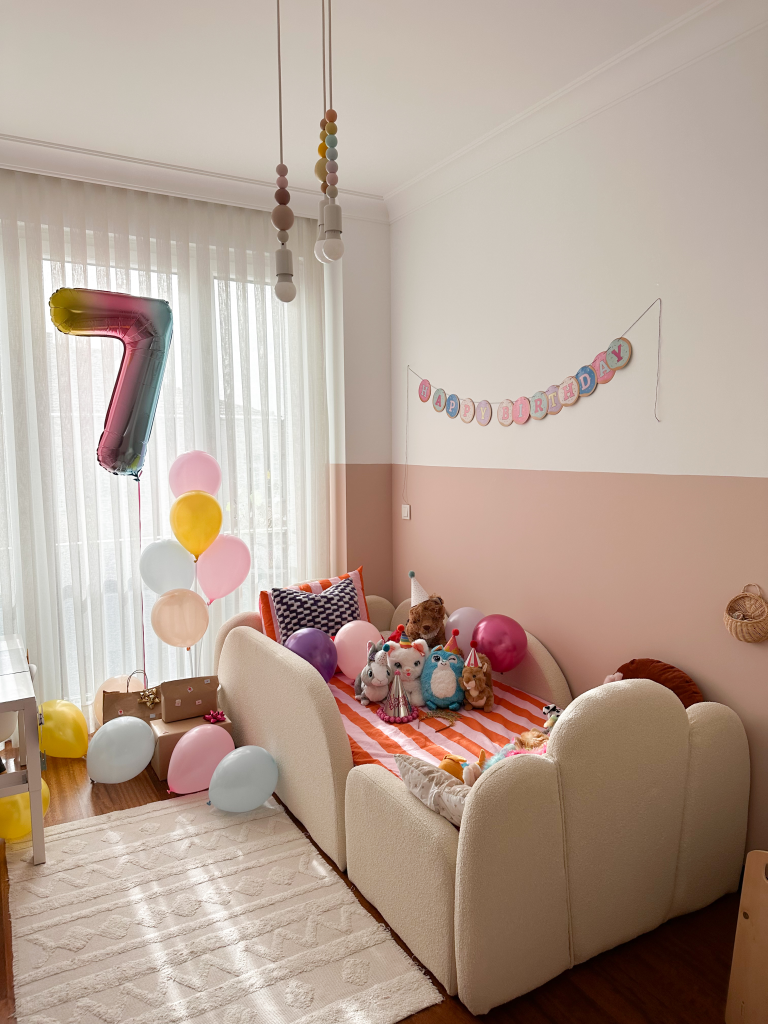
My daughter just turned seven.
As I reflect on this past year, I can see clearly how it was a milestone.
It is when you begin to see it. The effort you poured into the early years…the connection, the co-regulation, the boundaries, the protection of play — it begins to show.
Not in a dramatic, overnight transformation. But in something quieter.
A calmer more capable child. Regulation skills starting to emerge. More independence. More creativity and curiosity than ever. And the conversations — they go deeper.
You can feel the foundation you built in those early years.
In Montessori terms, this is the transition from the first plane of development (0–6) into the second plane (6–12).
And it’s not just a birthday. It’s a developmental shift.
The first plane is the age of absorption. Children are building themselves — their movement, their language, their sense of order, their independence. It’s the stage of: “Help me do it myself.”
The second plane is different. Now they want to think. To reason. To question. To understand the why behind everything. Now it becomes: “Help me understand.”
And you feel it.
The second-plane child turns outward. Friendships matter more. Group belonging matters more. Peer relationships take center stage. Comparison starts to take a toll emotionally. Free play — real, imaginative, unstructured play — becomes social and expansive.
And this is the part I see so many parents unintentionally crowd out. Because six looks capable. Six looks ready. Six looks mature.
So we overschedule. We introduce more tech. We prioritize performance over play. We expect more regulation from our ‘big kids’.
But this stage still needs space. And tenderness.
Free play is still building:
The work isn’t finished. It’s evolving.
The early years are about planting. The years that follow are about watching it grow.
When you protected connection… when you validated feelings but held boundaries firmly and kindly… when you allowed frustration instead of rescuing and fixing… when you prioritized play over pressure…
You see it now. In the way they handle disappointment. In how they negotiate with friends. In how they reflect after making a mistake. In the way they recover. It’s not perfection. But it’s growth.
If the first plane asked us to build independence and order, the second plane asks us to build character and belonging.
The child who once needed our help tying their shoes now needs our help making sense of the world — of fairness, relationships, responsibility, and their place within it.
This stage asks us to:
Second-plane children are no longer satisfied with simple answers. They question. They analyse. They seek meaning. This is the age to listen more, to wonder alongside them, and to take their thoughts seriously. Our role is not to give them all the answers, but to help them develop their capacity to think, reflect, and form their own understanding.
Their sense of justice is awakening. They are forming their internal compass. Rather than enforcing blind obedience, this is the time to explain the “why,” to discuss fairness, consequences, and values. Through these conversations, they begin to internalize principles that will guide them long after our influence fades.
Independence now evolves into responsibility — not just for tasks, but for actions, choices, and relationships. They are capable of contributing meaningfully to family life, of taking ownership, and of learning from mistakes. Our trust in their capability strengthens their trust in themselves.
Though they appear more mature, play remains essential. Free play is where they negotiate rules, resolve conflicts, test ideas, and develop resilience. It is where imagination and social intelligence flourish. This is not the time to replace play with performance or productivity.
Peer relationships become central in this stage, and with them comes friction, disagreement, and hurt. While it can be difficult to witness, these moments are fertile ground for growth. When we resist the urge to immediately fix or intervene, and instead guide them in reflecting, problem-solving, and repairing, they develop confidence in their ability to navigate the social world.
Children at this age are deeply observant. They notice not only what we say, but how we act. They are watching how we handle mistakes, frustration, and conflict. When we model accountability, apologize when needed, and repair ruptures in relationship, we teach them that being human includes imperfection — and that relationships can be restored. And that is a lesson worth teaching!
This isn’t the age to rush. Not the age to over-schedule. Not the age to expect constant productivity or emotional maturity beyond their developmental readiness.
This is the age to strengthen the roots.
Six is beautiful. Not because it’s easy. But because it reveals what was planted.
If you are still in the early years — in the messy, loud, emotionally intense days of toddlerhood and preschool — hear this:
The seeds matter. Connection matters. Co-regulation matters. Boundaries matter. Play matters.
The fruits will come. Trust the process.
COPYRIGHT © 2023 WONDERHOUSE OF LITTLES LLC. ALL RIGHTS RESERVED
Leave a Reply